🌋 Great Sitkin Volcano Is Still Erupting — What Are Scientists Watching for Next?
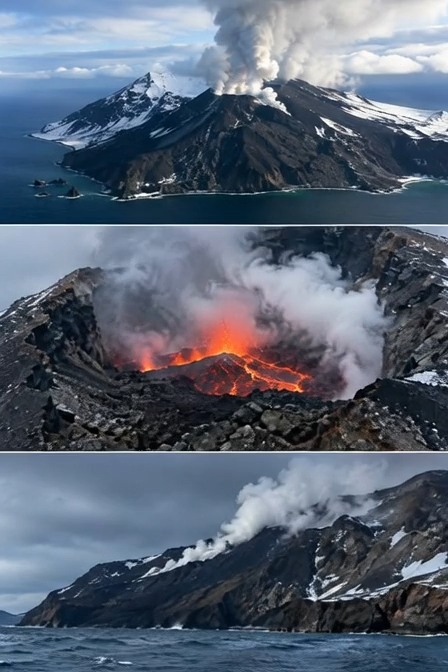
🌋 GREAT SITKIN VOLCANO IS STILL ERUPTING — SCIENTISTS ARE WATCHING CLOSELY AS ACTIVITY CONTINUES IN ALASKA!
Deep in Alaska’s remote Aleutian Islands, Great Sitkin Volcano remains active, and scientists are continuing to monitor its behavior.
The volcano has not gone quiet. Lava continues to slowly erupt within its summit crater, while weak steam emissions and small earthquakes provide additional signs that activity is ongoing beneath the surface.
Although the current activity does not automatically indicate that a major explosive eruption is approaching, scientists are keeping a close watch for any changes that could signal a shift in the volcano’s behavior.
The latest update dated October 29 from the U.S. Geological Survey (USGS) lists Great Sitkin at WATCH / ORANGE, indicating an elevated level of volcanic activity that requires continued monitoring.
So, what exactly is happening at the volcano, and what are scientists looking for next?
🔥 LAVA CONTINUES TO MOVE INSIDE THE SUMMIT CRATER
One of the most important developments at Great Sitkin is the continued slow eruption of lava inside the summit crater.
Unlike explosive eruptions that can send towering ash columns high into the atmosphere, this type of activity can involve lava gradually accumulating and moving within the crater.
Even when an eruption appears relatively quiet, molten rock remains an important sign that the volcanic system is active.
Scientists monitor changes in the lava’s movement, temperature, and extent to understand whether the eruption is maintaining its current pace or beginning to intensify.
The situation may look calm from a distance, but an active volcanic system can change over time.
🌫️ WEAK STEAM RISING FROM THE VOLCANO
Another observation mentioned in the latest update is weak steam rising from the volcano.
Steam emissions can occur when heat from volcanic material interacts with water, snow, ice, or moisture within the surrounding environment.
Such emissions are not necessarily evidence of an imminent explosive eruption. However, changes in the amount, temperature, or composition of volcanic gases and steam can provide scientists with useful information about what is happening beneath the crater.
That is why even relatively modest emissions are worth monitoring.
🌎 SMALL EARTHQUAKES PROVIDE ANOTHER CLUE
Scientists have also detected a few small earthquakes in the area.
Volcanic earthquakes can occur when magma moves underground, volcanic gases shift, or pressure changes within the surrounding rock.
Not every earthquake signals an impending eruption. Small seismic events are common around active volcanic systems, and their significance depends on factors such as frequency, strength, depth, and whether activity begins increasing.
Researchers look for patterns rather than interpreting one isolated earthquake as a warning of disaster.
If seismic activity becomes more frequent or is accompanied by other significant changes, it could provide important clues about the volcano’s condition.
🚨 WHY IS GREAT SITKIN AT WATCH / ORANGE?
The USGS uses a system of alert levels to communicate volcanic hazards.
For aviation, the color ORANGE indicates that a volcano is exhibiting heightened unrest or an eruption with significant ash emissions that are not expected to produce a major ash plume.
The WATCH alert level indicates an elevated level of volcanic activity or an eruption with increased potential hazards.
These classifications are important because they help aviation authorities, scientists, and emergency-management agencies understand the current level of concern.
However, an ORANGE alert does not mean a major explosive eruption is inevitable.
It means the volcano is active enough to warrant close observation and continued ᴀssessment.
🔬 WHAT ARE SCIENTISTS WATCHING FOR NEXT?
Researchers will be looking for several possible changes:
- Increasing earthquake activity: A noticeable rise in the number or intensity of earthquakes could indicate changes beneath the volcano.
- Changes in steam and gas emissions: New or stronger emissions may provide clues about shifting volcanic conditions.
- Changes in lava activity: Faster movement, increased output, or changes in the lava field could indicate a change in the eruption.
- Ground deformation: Changes in the shape or elevation of the volcano may reveal pressure changes beneath the surface.
- Ash emissions: Any new explosive activity capable of producing ash would require careful ᴀssessment, particularly because of potential aviation hazards.
By combining seismic measurements, satellite observations, cameras, and other monitoring techniques, scientists can build a clearer picture of what is happening inside the volcano.
🌋 A QUIET ERUPTION DOES NOT MEAN AN INACTIVE VOLCANO
Great Sitkin is a reminder that volcanic activity does not always arrive with dramatic explosions, towering ash clouds, or rivers of lava racing down mountainsides.
Sometimes, an eruption continues slowly and steadily, with subtle changes that only become apparent through careful scientific monitoring.
For now, the reported activity includes continued lava eruption inside the crater, weak steam emissions, and a small number of earthquakes.
There is no reason to ᴀssume that a major explosion is about to happen based on those observations alone. But scientists will continue watching closely because volcanic systems can evolve, and early signs of change matter.
The big question remains: Will Great Sitkin continue its slow lava eruption, or will scientists begin detecting signs of a more significant change?
For now, the volcano remains under close observation.
💬 What do you think is most fascinating about active volcanoes—the slow movement of molten lava, the earthquakes beneath the surface, or the possibility of sudden changes?
Stay tuned for verified updates from the USGS and Alaska Volcano Observatory.
✓ Team
🌋 GREAT SITKIN VOLCANO IS STILL ERUPTING — SCIENTISTS ARE WATCHING CLOSELY AS ACTIVITY CONTINUES IN ALASKA! Deep in Alaska’s remote Aleutian Islands, Great Sitkin Volcano remains…